Today is our school end of the year party and Christmas carol,So I was asked to cook jellof rice,in which I did I cooked the normal Nigeria jellof rice,salad and small pepper meat,so sorry I did not snap the ingredients cos I was running out of time but I will type it below 👇 Rice,meat, groundnut oil,crayfish Pepper, onions, tomatoes Jellof rice spices Carrots,Peas,green pepper,green beans Cabbage, cucumber So on behalf of our school management,the pupils and the staffs we are wishing you all a merry Christmas and prosperous new year in advance… Enjoy the celebration and please stay safe… Sending love to you all💕💕💕🥰♥️😍😘😘😘
SCRIPTURE: Ye are the light of the world. A city that is set on an hill cannot be hid. Let your light so shine before men, that they may see your good works, and glorify your Father which is in heaven. Matthew 5:14, 16
THOUGHT FOR THE DAY: Your excellence is more evangelistic than your utterance.
The scripture makes it clear to us that God wants us to stand out in life. The mountain, not the valley, is our destiny. The top, not the pit, is our place (Deuteronomy 28:13). The front is our place, not the back.
Now, why is God interested in making us to excel?
Excellence/distinction in life brings glory to God. When we stand out in what we do, when we become the reference figure in our field, God is glorified (Matthew 5:14, 16).
Excellence/distinction in life compels the ungodly to come to the knowledge of our God (Isaiah 60:1-3). Your excellence is more evangelistic than your utterance. People are more convicted by your manifestation than by your declaration. One result will preach a thousand messages. One testimony is worth a thousand sermons. For you to influence people in authority and around you, you need to be up. It is easier for the boss to tell his driver, “Follow me to church” than for the driver to say, “Boss, follow me to church.” except he wants to be sacked.
Beloved, every effort to go up is not a waste; keep at it. Do all you can to go up, not just for your sake, but for the sake of the Kingdom and the Gospel.
I declare that the anointing that will take you up is coming on you now, in Jesus’ Name.
Remember this: Your excellence is more evangelistic than your utterance.
ASSIGNMENT(S):
Take Divinely orchestrated and calculated steps that will take you up in life.
Add value to yourself by increasing in knowledge and strategically apply the knowledge.
Make demands on Divine favour upon your life.
FOR FURTHER UNDERSTANDING, GET THIS MESSAGE: THE PROFIT OF EXCELLENCE AND DISTINCTION (PART 6).
PRAYER: Lord, I receive the grace to stand out in life to the glory of Your Name. I refuse the background existence. Help me, Lord to impact and influence the world for You through the force of excellence and distinction, Lord, in Jesus’ Name.
DAILY BIBLE READING: Hebrews 6-8
QUOTE: Excellence is our heritage. Mediocrity is a misrepresentation of the Divine nature. Culled from “30 SECRETS TO THE TOP” by Dr Paul Enenche.
PROPHETIC DECLARATION/WORD: The Lord release upon you the Spirit of excellence in Jesus’ Name.
REFLECTION: The eaglet must know how to soar, the lion’s cub must know how to roar, and the child of the excellent God must know how to be excellent.
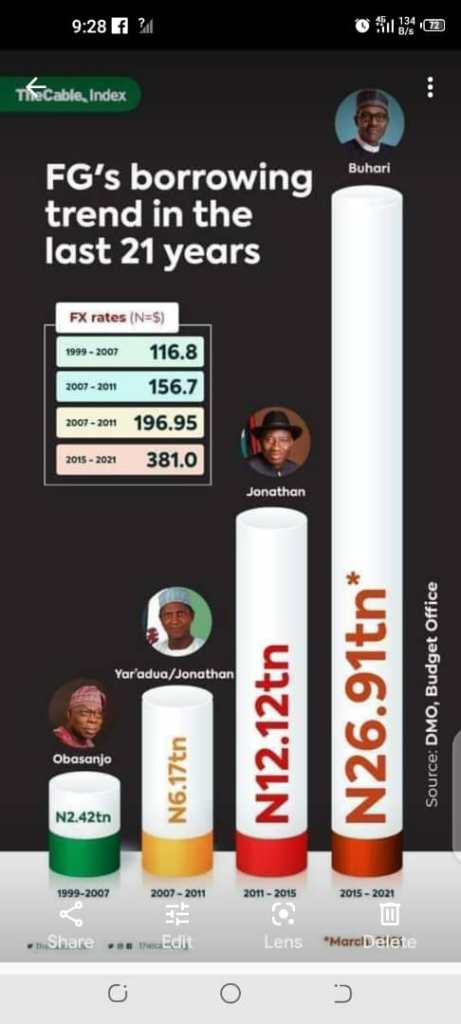
It’s no longer news that Nigeria’s total debt hit #35.5 trillion, this is According to the Director-General of the debt management office (DMO), Patience Oniha, (reference: the Guardian newspaper Sept. 2021)DEBT PROFILE UNDER olusegun obasanjo’S ADMINISTRATION (1999-2007): During the tenure of former president Olusegun Obasanjo, the debt level of the federal government reduced from N3.55 trillion in 1999 to N2.42 trillion at the end of 2007. The 8-year term of Obasanjo resulted in a dip in FG’s local and foreign debt level, representing a 31.8 percent decline. The country’s exchange rate was between N98.02 to N116.8 to a dollar during the tenure. Analysis of the figures showed that external debt decreased from $28.04 billion by 1999 to $2.11 billion at the end of 2007. However, the domestic component increased from N798 billion to N2.17 trillion within the same period. The huge decline in foreign debt was a result of the substantial reduction following the pay-off of the outstanding debts owed to the London Clubs of Creditors in the first quarter of 2007. DEBT PROFILE UNDER yar’adua/jonathan ADMINISTRATION (2007-2011): Under the Umar Musa Yar’Adua/Goodluck Jonathan-led government between 2007 and 2011, domestic debt of the federal government moved from N2.17 trillion to N5.62 trillion. The foreign component of the debt also increased from $2.11 billion to $3.5 billion within the period. The country’s exchange rate also moved from N116.8/$1 to N156.7/$1. The combined debt profile increased from N2.42 trillion to N6.17 trillion in four years, representing a 155 percent jump. Of the debt figure, Jonathan completed the tenure from May 2010 to May 2011 after the death of Yar’Adua. The period saw a surge in the federal government’s debt from N4.94 trillion to N6.17 trillion. This represents a 24.9 percent increase in one year. DEBT PROFILE UNDER JONATHAN’S ADMINISTRATION (2011-2015) At the beginning of former President Goodluck Jonathan’s tenure in 2011, the federal government had an accumulated debt of N6.17 trillion. Analysis of the debt figure showed that local debt amounted to N5.62 trillion while foreign debt stood at $3.5 billion (about N548.65 billion, using the exchange rate of N156.7/$1). DEBT PROFILE UNDER mohamadu buhari ADMINISTRATION (2015-2021): By the end of 2015, the foreign debt component hit $7.3 billion, while domestic debt increased by N8.4 trillion. The country’s exchange rate also stood at N197/$1. Overall, the federal government component of the total public debt increased from N6.17 trillion in 2011 to N9.8 trillion in 2015, representing an increase of N3.63 trillion or 58.8 percent.The Budget Office’s medium-term expenditure framework and fiscal strategy paper from 2015 showed that the Buhari-led administration incurred N7.63 trillion in domestic debt from June 2015 to December 2020.On external borrowings, President Buhari increased debt from $7.3 billion in 2015 to $28.57 billion as of December 2020. This means that the president incurred $21.27 billion on foreign loans to the country’s debt portfolio. The country’s exchange rate moved from N197 to a dollar in 2015 to N381 at the end of December 2020.Analysis of consolidated debt showed that the external debt increased by 291.37 percent while domestic debts grew by 86.31 percent in the last six years of the Buhari government. Overall, the Buhari-led government has had an accumulated debt of N17.06 trillion as of March 2021, using the N381 exchange rate. This represents a 173.2 percent increase from when he was elected president in 2015.NIGERIA’S ACTUAL DEBT COULD BE #35.5 trillion Wilson revenue not improving as expected, creating a wide fiscal deficit that is majorly financed by borrowing.“While borrowing is required to support the economy, especially given the impact of the pandemic, what we need to be concerned about is how sustainable Nigeria’s debt position is,” he said.“Debt has risen N33.1 trillion as of March 2021, an increase of 162.7% in the space of about five years.“ “Debt to GDP may seem quite low at 32 percent, we must understand that debt is serviced with revenues, so if debt servicing is increasing and revenue is not performing, then we have a problem.”Erumebor suggests that the federal government must improve efficiency, transparency, blocking leakages, and deliver value on public projects, despite limited resources.“We must work towards unlocking many sectors and many areas where the country can earn revenue.”In 2020, the International Monetary Fund (IMF) said Nigeria’s low debt-to-GDP ratio is highly vulnerable to shocks.“Despite Nigeria’s relatively low debt level, liquidity-based indicators-driven by low revenue mobilization-remain concerning, with the interest bill representing a high share of government revenue (but low relative to GDP),” IMF said in its country’s report for Nigeria.“Stress scenarios confirm the vulnerability of public debt to a low growth/wide primary deficit scenario. The interest-to-revenue ratio is particularly vulnerable to a real interest rate shock but remains sustainable.”Recently, market researchers at United Capital also expressed concern over the country’s rising debt sustainability risk. “The government has historically justified its rising debt profile by the compliant debt-to-GDP ratio of less than 30.0%,” the research firm said.“However, we reiterate our position that the FG’s debt service cost as a percentage of revenue is a fairer reflection of the country’s debt sustainability position.”At an overall public debt of N35.5 trillion ($89.24 billion), the implication remains that every Nigerian owes both local and foreign organizatio
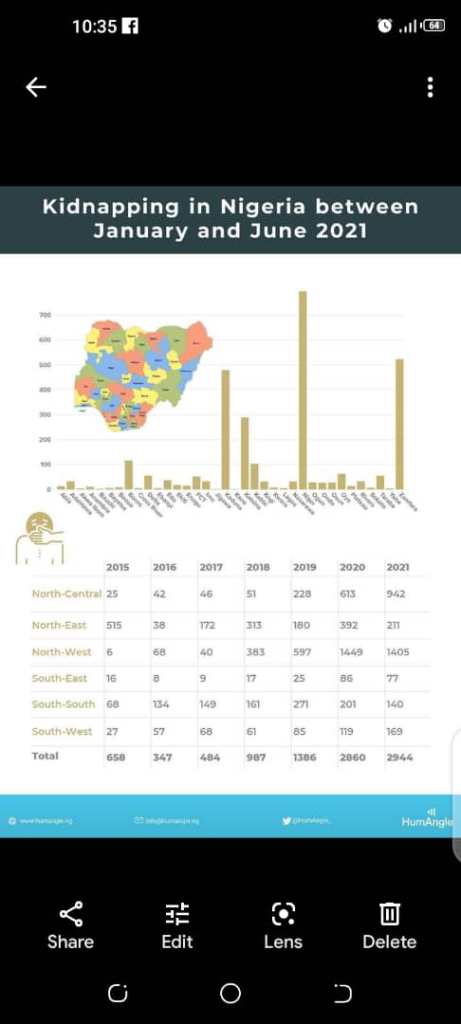
The statistics will not be completed if we start the analysis from 2015 and forget about 2014 because that was when most alarming mass abduction of school children in Nigeria took place The abduction of 317 schoolgirls at Government Girls Secondary School, Jangebe in Zamfara State on Friday is the latest episode of a phenomenon that is fast becoming commonplace in Nigeria. The breakdown of security in the North-west and North-central regions of the country has led to a surge in kidnapping and banditry and added to the over a decade-old insurgency in the North-east. Kidnapping is one of the most pervasive and intractable violent crimes in the country, experienced in less dramatic forms in the southern part of the country. Nigeria has one of the world’s highest rates of kidnap-for-ransom cases globally. Over the years, this has continued in spite of the government vow to address the situation. Different bands of outlaws are responsible for the menace in the North-west and North-central, unlike in the North-east where Boko Haram claimed responsibility for the two incidents in Chibok and Dapchi some years ago. Trend of abduction in Nigeria Here are some of the cases of mass kidnapping of schoolchildren in Nigeria in the last seven years and the events around them. April 14, 2014: Boko Haram terrorists abducted hundreds of schoolgirls from their dormitories in Chibok, Borno State at a time the students were writing their final year exams. About 57 of the girls manage to escape at different times while on transit with their abductors. April 16, 2014: The military said soldiers had rescued over 100 of the Chibok schoolgirls but quickly withdrew the claim after the school principal, Asabe Kwambura, and many of the parents of the abducted girls refuted it. May 12, 2014: Boko Haram releases the first video of the abducted girls, a development which confirmed that the girls were actually in the custody of the Abubakar Shekau-led terror group. Mr Shekau in the video threatened to marry the girls off or use them as part of his war booty. May 20, 2014: The Borno State government set up a N150 million special fund for the rehabilitation of the 57 Chibok girls who had escaped. October 16, 2014: The former Chief of Defence Staff, Alex Badeh, an air vice-marshal, said the federal government had reached a ceasefire deal with leaders of Boko Haram and that the 216 girls in their captivity would soon be released. But Boko Haram leaders quickly denied the claim.November 2, 2014: Boko Haram leader, Mr Shekau, released a video in which he declares that all the 216 girls in his custody had been converted to Islam and married off. He also denied ever negotiating with the federal government concerning the girls.ⓘMarch 24, 2015: A woman who escaped from Boko Haram captivity said some of the Chibok girls were being held somewhere near Gwoza and that two of the girls had been killed during a military air strike on one of the terrorists’ locations.May 29, 2015: President Muhammadu Buhari, in his inaugural speech, promised to end the Boko Haram insurgency and rescue the Chibok schoolgirls “within six months”.August 29, 2015: President Buhari meets 90 of the parents of the abducted Chibok girls during which he restated his promise to rescue the girls. November 30, 2015: President Buhari during a media chat said there is no “credible information” on the whereabouts of the Chibok girls, dashing hopes in their release. May 18, 2016: One of the abducted Chibok girls, Amina Ali Nkeki, was found with her baby and a man she identified as her husband. October 13, 2016: Boko Haram releases 21 Chibok girls following negotiations. January 5, 2017: Another Chibok girl, Rakiya Abubakar, is found with her baby, which brought to 23 the number of the abducted girls to have regained freedom.May 2017: Another 82 girls are released in exchange for five Boko Haram commanders. Later that month, Boko Haram released a video in which a woman in a black veil claiming to be one of the Chibok girls brandishes a gun and proclaims loyalty to the group. December 30, 2020: The Chibok community demands the release of the remaining schoolgirls in Boko Haram captivity. February 18, 2018: Nearly 110 schoolgirls are kidnapped by Boko Haram terrorists in Dapchi town of Yobe State. February 20, 2018: The Nigerian government confirms that 110 schoolgirls are missing. February 21, 2018: The Yobe State government announces the rescue of some of the girls and says they are with the army. February 22, 2018: The Yobe government retracts the statement and apologises for misleading the public, saying “No girl was rescued.”February 23, 2018: President Buhari calls the abduction of schoolgirls in Dapchi a ‘national disaster’. February 25, 2018: The Nigerian Air force announces the deployment of aircraft and additional personnel for search and rescue missions.March 9, 2018: Women hold a protest in Abuja three weeks after the abduction of the Dapchi schoolgirls.March 12, 2018: President Muhammadu Buhari announces plan to negotiate the girl’s release, rather than use military force. March 14, 2018: Mr Buhari makes first visit to Dapchi, assuring parents of the missing schoolgirls that the government will rescue the students. March 20, 2018: Amnesty International claims Nigerian Army ignored repeated warnings of an attack on Dapchi town, hours before the abductions. March 21, 2018: The Nigerian government announces that 104 of the 110 schoolgirls have been freed.December 11, 2020: Suspected gunmen attack Government Boys Science Secondary School in Kankara Local Government Area of Katsina State and abduct over 300 students. December 12, 2020: the Katsina State government shuts all public schools. December 12, 2020: Mr Buhari speaks on the abductions. December 16, 2020: Parents and guardians of the abducted schoolboys in Kankara said they were disappointed with President Buhari and Governor Aminu Masari, who they said had failed to ensure security in the state. December 17, 2020: The abducted Kankara students regain freedom.December 18, 2020: The United States (U.S.) condemns the abduction of students, urging the Nigerian government to hold kidnappers accountable. February 17, 2021: Suspected bandits abduct 27 students and 15 others at Government Science School, Kagara in Niger State. February 17, 2021: The federal government promises to take ‘political and military’ steps to secure the release of college students. February 17, 2021: The Nigerian Army said its troops were in ‘hot chase’ of the bandits behind the abductions in Kagara. February 19, 2021: The governor of Niger State said negotiation for the release of the abducted persons is at the final stage. February 24, 2021: Kidnappers demanded ransom from victims’ parents and warn that the students may starve to death if the ransom is not paid quickly. February 25, 2021: The governor of Niger State said the Nigerian government is not ‘helping’ in the rescue of the abducted persons. February 26, 2021: Bandits kidnap 317 female students of Government Girls Secondary School Jangebe, Zamfara State in an early morning raid on their school. February 26, 2021: The Zamfara State government confirms the abduction. February 26, 2021: The police confirm that 317 schoolgirls were abducted in Jangebe. The most recent one happened on November 4th where three staffs of university of Abuja were kidnapped.
Kaduna polytechnic is one of the easiest polytechnic in Nigeria located at tudun wada area of Kaduna South local government of Kaduna state. It was established in 1956 as Kaduna technical institute as one of the best police in Nigeria. But the issue of transportation from one campus to the other requires bitter effects by the students on a daily basis. With large number of students in Kaduna polytechnic, the number of school buses currently available to convey the students from one campus to the other are grossly inadequate. The kind of struggle one experiences before gaining entrance into the school is better imagine than experience. This is largely due to the limited number of school buses. And the matter usually gets out of hand when it is rushing hour either to or from lectures. Why students are still battling with the inadequacy of available vehicles for their transportation, the school authority increased the ticket fee from #20-#30 and now presently #50 with a very short interval of Time. A source within the works of Department justified and increment of the school bus transport fare, insisting that the school management had for so long ran the students. However, investigation shows that mass number of students boarding the school buses darling from morning to afternoon sections. Students undergo unnecessary stress and undue pressure as they usually queue up waiting to obtain tickets and themselves squeeze into the bus. This is quite an eyesore in a polytechnic like kadpoly, some unlucky students who may not get the tickets due to the crowd and the push me I push you drama that characterise the whole thing would later be forced to take public transport for their lectures and pay through their noses. Therefore, and as a way of concluding this piece, the necessity to make provision for more school buses for the overcrowding population of Kaduna polytechnic students is very imperative.
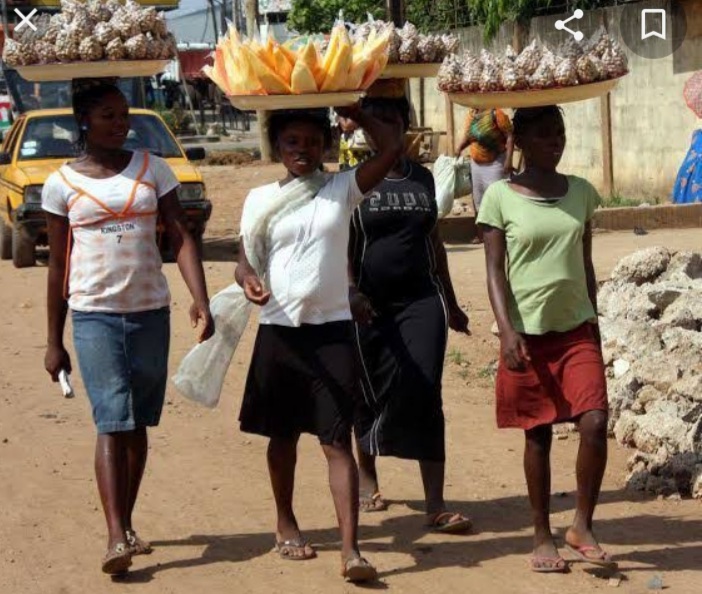
Child hawking is prevalent practice in Nigeria most major highway and streets are often flooded with emaciated children running often cars on shrunken legs and balancing boxes of pastries and cigarettes twice their size on their bobbleshead. The international labour organisation estimates in Nigeria about 14 million children between the ages of 5 and 15 are involved in a form of economic activity. But why a loss of education is the most cited side efforts hawking, the dangers aren’t just academic they are physical too.
This is the picture of a child hawking pure water on the street Females children that are suppose to be in school hawking in the street of Nigeria 🇳🇬
Welcome to michealchichildren. Family. Blog, I am here to enlighten you on varieties of contents in regards to discovering your child’s potentials in all ramifications let’s work together to keep building the page and each other
Children are precious gift given by God! and as such needs to be treasured both in words and actions. Potential is the ability or the capacity to develop one’s traits into something great in the future.
Here are a few ways parents can discover the potential of their children.





 Site Title